The challenge
Restoke had a powerful product, but the brand, website and product experience were not yet telling the same story. Internally, teams were still aligning around how to explain the platform’s value, while externally, restaurant operators needed to quickly understand why Restoke mattered and how it could help them regain control. The challenge was to create a more cohesive experience across multiple touchpoints without losing sight of conversion, usability or trust. The brand needed to feel bold and distinctive, the website needed to educate and convert, and the product needed to make complex operational tasks feel simple, structured and actionable.
The approach
Translating strategy into a digital brand
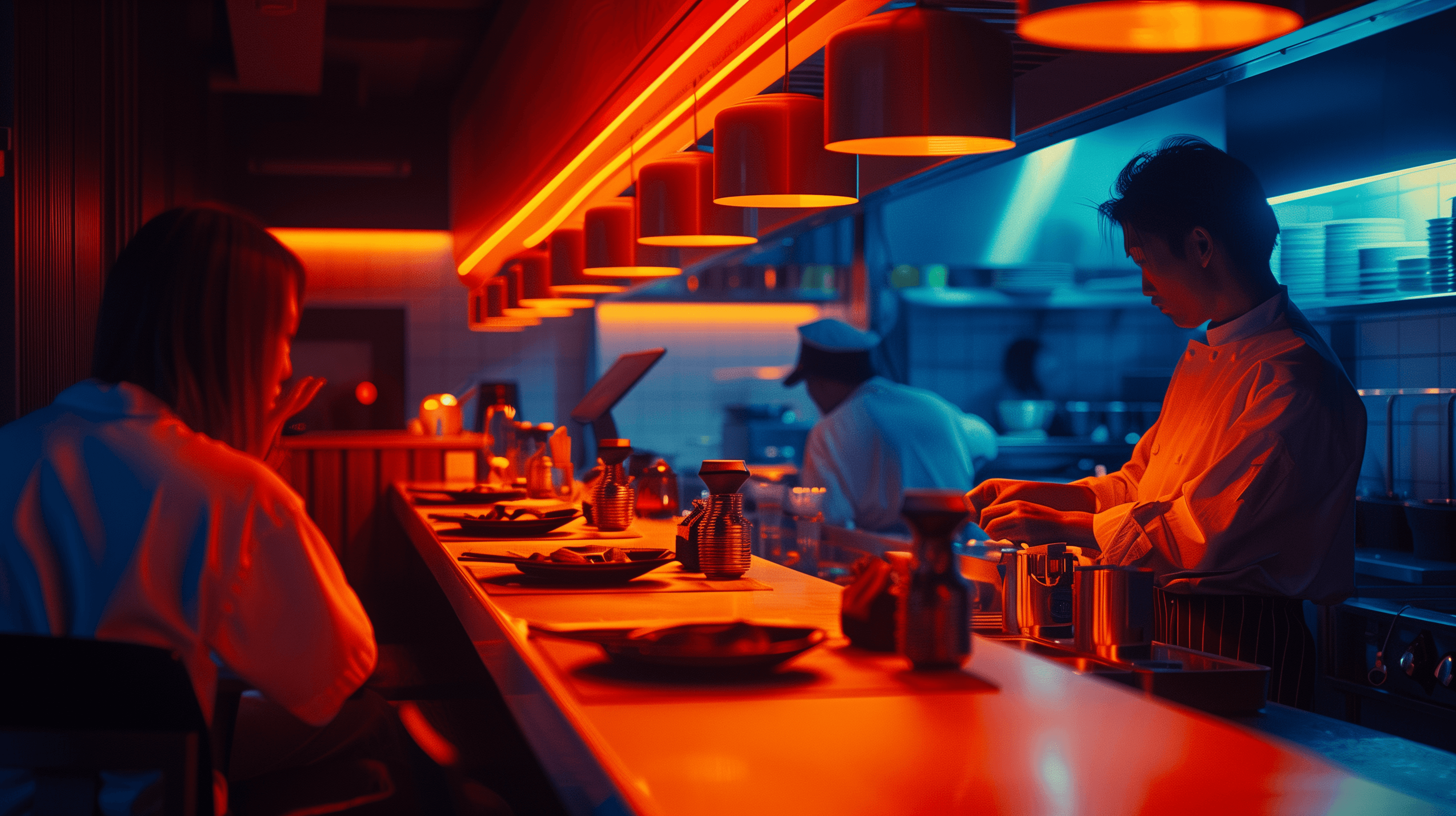
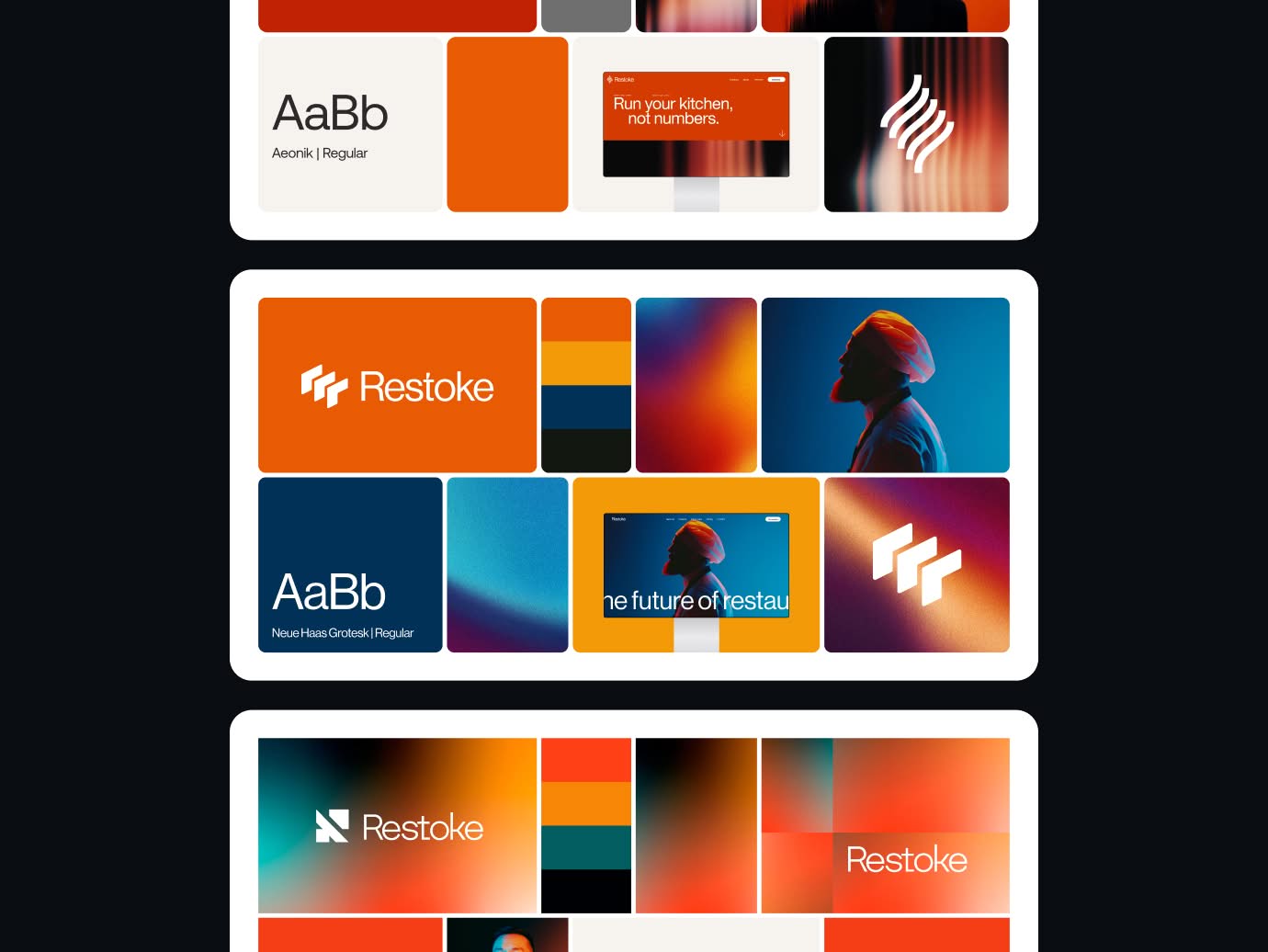
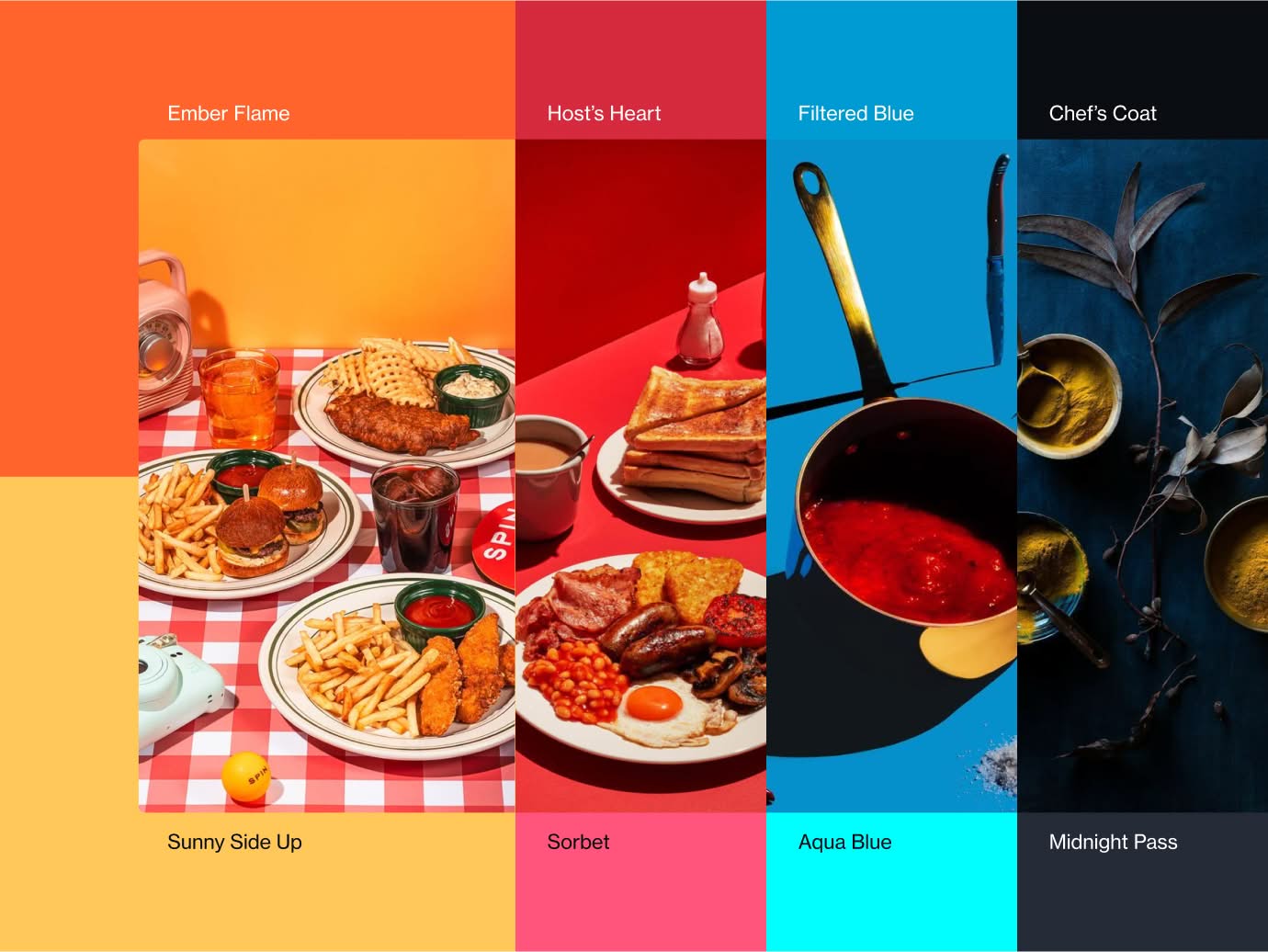
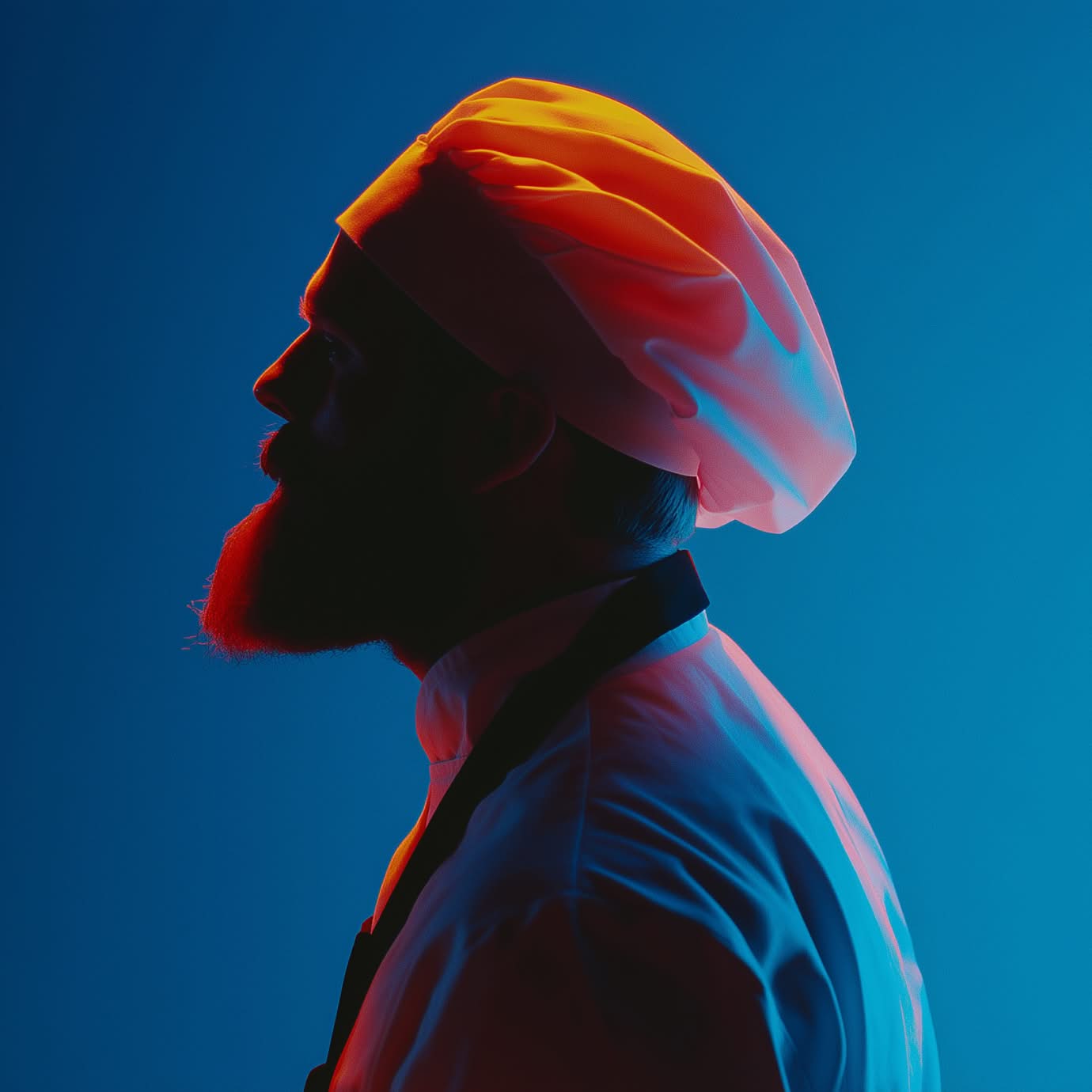
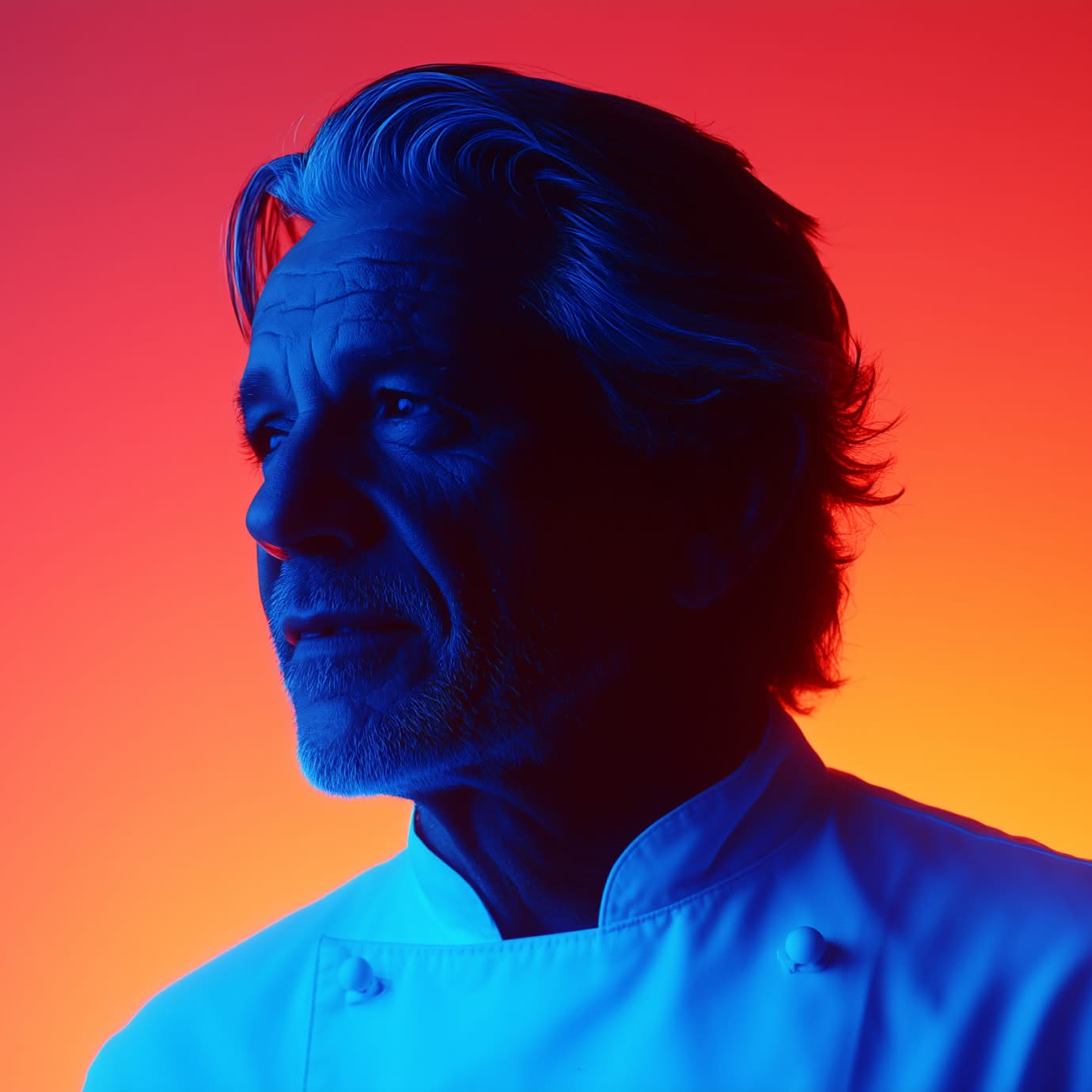
Supporting my creative director, I helped shape the direction for Restoke’s refreshed brand, particularly how it could show the tension between hospitality craft and operational intelligence. I explored AI-assisted imagery using deep blue and ember-like gradients, chef silhouettes and dramatic side lighting to create a visual language that felt confident, human and distinct from typical SaaS brands.
01
Creating a scalable visual system
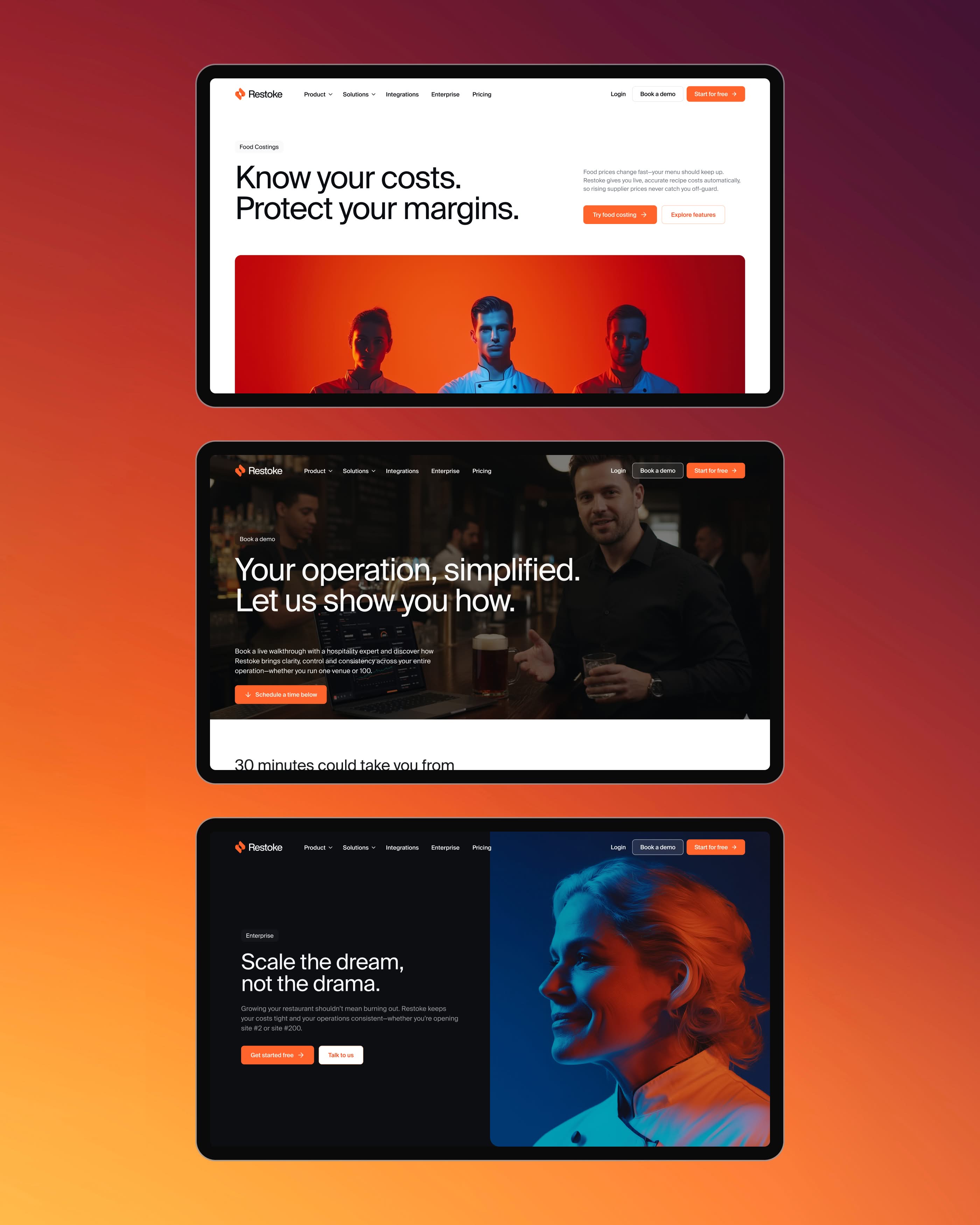
To support both the website and product, I built the visual foundations around reusable styles, components and design tokens. This helped the brand flex between light and dark experiences, supported the more cinematic Enterprise page direction, and created a stronger bridge between marketing design and the product interface.
02
Using AI to synthesise discovery
I helped facilitate brand, website, and product discovery, then used AI to synthesise workshop notes, strategic inputs and the copywriter’s “Voice & Messaging Toolkit” into clearer themes, content priorities and narrative-led wireframes. This helped move the website beyond generic page layouts, showing the client how the new brand story, messaging and conversion journey could work together before high-fidelity design began.
03
Designing the website journey
I designed the full website experience around clarity, trust and conversion. The structure prioritised high-value decision points such as integrations, pricing, proof and enterprise needs, while balancing brand-led visuals with real customer photography. Each page was designed to feel like part of a connected story, helping time-poor restaurant operators understand the value of Restoke quickly and confidently.
04
Simplifying the product architecture
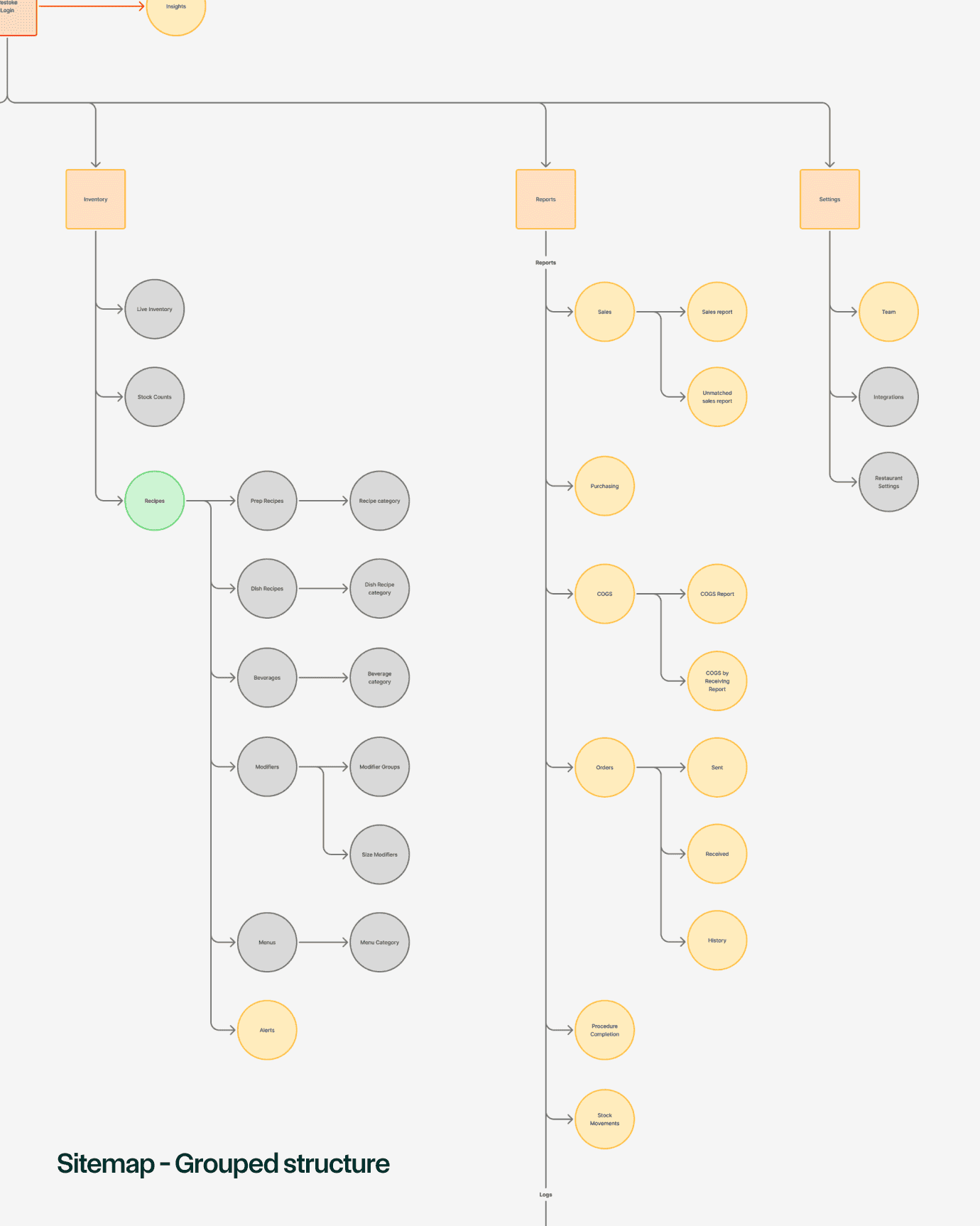
A major part of the product work involved rethinking the app’s navigation and overall sitemap. I explored ways to reduce a large navigation structure down to a more focused set of core areas, grouping related tasks more logically so users could understand where to go and what mattered most.
05
Redesigning key product flows and screens
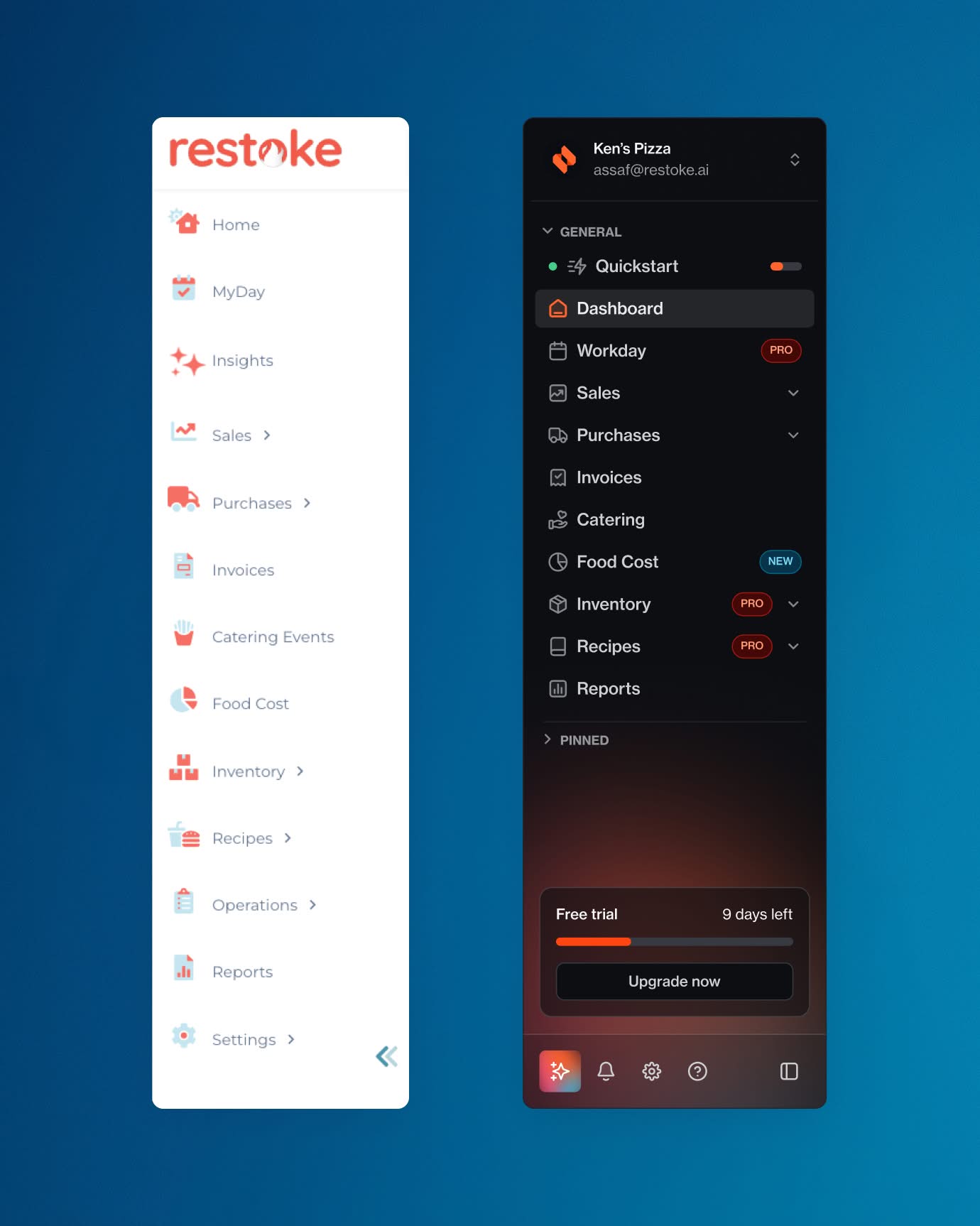
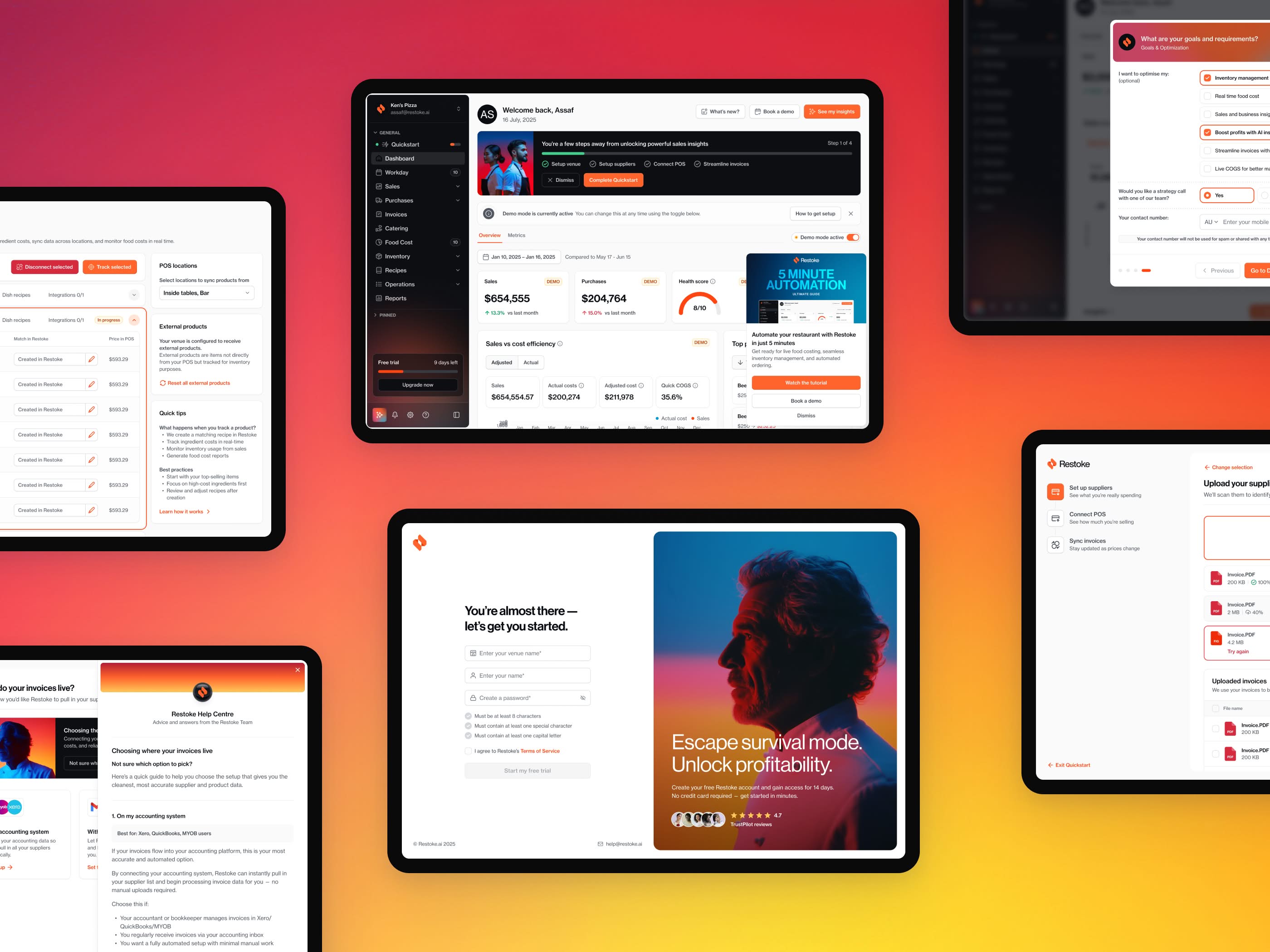
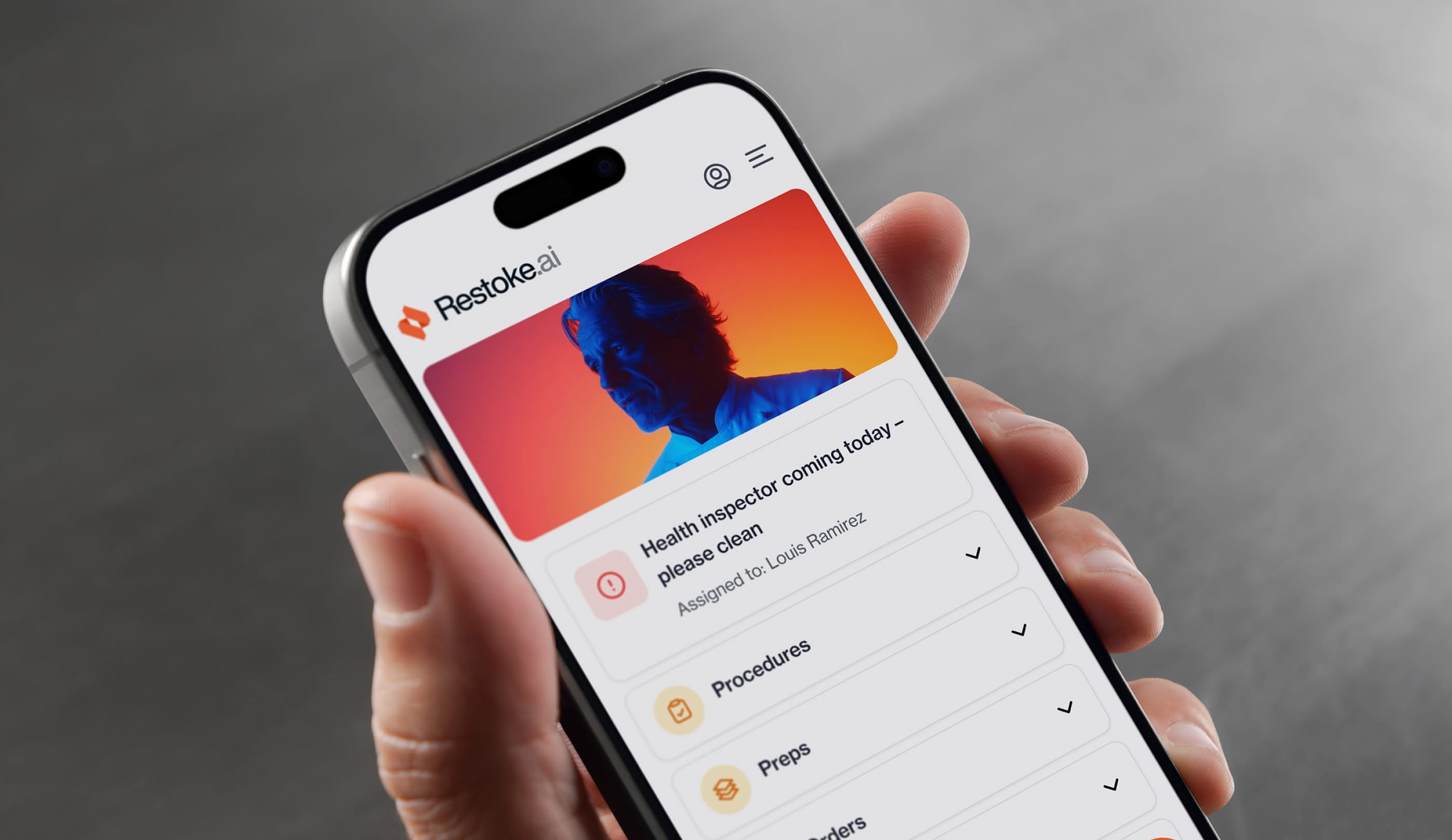
I redesigned key parts of the product experience, including the Quick Start flow, dashboard, invoices and orders. A key focus was making the navigation more task-orientated: changing “Home” to “Dashboard” for overview, metrics and insights, while evolving “MyDay” into “Workday” — a clearer home for operational tools such as tasks, prep lists, procedures, training, waste logs and newsfeed. This helped shift the app away from business-defined features and towards the day-to-day objectives of staff and managers.
06

The Outcome
The project created a more connected Restoke experience across brand, website and product.
The refreshed brand direction gave Restoke a distinctive visual world that felt more emotional, bold and hospitality-led, while the website translated that identity into a clearer conversion journey across storytelling, proof, integrations, enterprise messaging and product value.
The product work extended the same thinking into the platform itself. By simplifying navigation, improving onboarding and uplifting key operational screens, the app began to feel more aligned with Restoke’s promise: helping restaurant operators move from chaos and guesswork to clarity, control and confidence.
Final Thoughts
Project information
Year
2025
Industry
Hospitality SaaS
Services
UX Design
UI / Visual Design
Design Systems
Brand Design
Creative Direction
IA
Product Design
Visit